
Concrete is one of the strongest building materials used in residential construction, but many homeowners are surprised to learn that it begins changing almost immediately after it is poured. One of the biggest changes is concrete shrinkage, a completely natural process that can influence the long-term performance of any garage floor coating.
Understanding concrete shrinkage garage floor coating systems is important because many of the cracks homeowners see are not signs of poor workmanship—they are simply part of how concrete behaves over time. The key isn’t preventing every crack. The key is properly preparing and repairing the slab before installing a coating.
At Precision Concrete Coating, every installation begins with evaluating the condition of the concrete so we can build a coating system designed to perform for years throughout Conroe, The Woodlands, Spring, Montgomery, Magnolia, Porter, Kingwood, Humble, New Caney, Willis, and the surrounding communities.
What Is Concrete Shrinkage?
Concrete contains water when it is poured. As that water evaporates during curing, the concrete slowly loses volume.
This process is called shrinkage.
Every concrete slab shrinks to some degree. Some shrinkage is barely noticeable, while other slabs develop visible hairline cracks as internal stresses build.
Shrinkage is one reason we always emphasize Surface Preparation for Garage Floor Coatings Why Surface Preparation Matters More Than The Coating before discussing coating materials. A properly prepared slab gives every coating system a stronger foundation.
Why Does Shrinkage Cause Cracks?
Concrete is extremely strong under compression but relatively weak under tension.
As shrinkage creates internal stress, the slab eventually relieves that pressure by cracking.
Most shrinkage cracks are:
- Narrow
- Random
- Cosmetic
- Stable
- Repairable
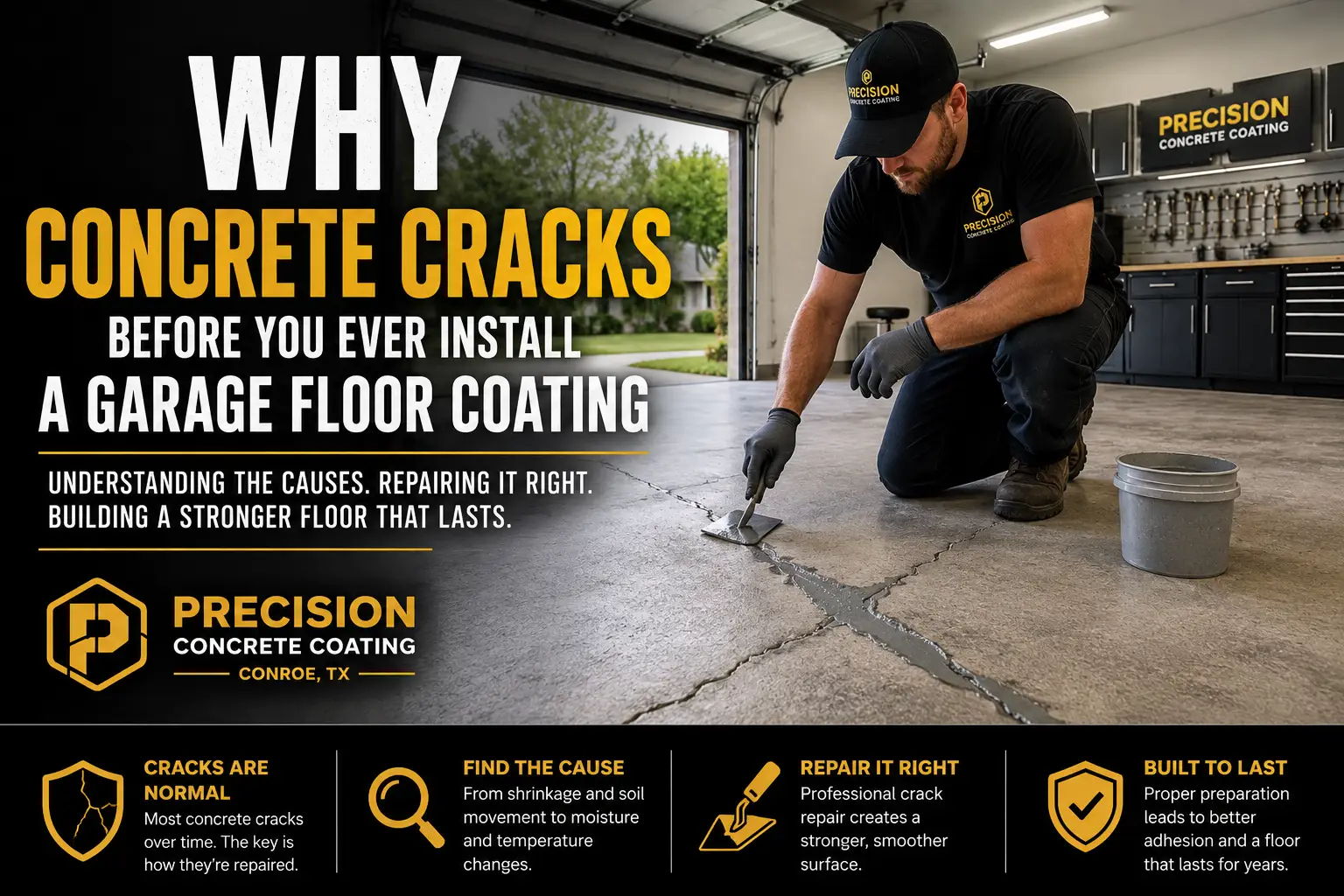
Our article Why Concrete Cracks Before You Ever Install a Garage Floor Coating why concrete cracks before a garage floor coating explains the different types of cracks installers evaluate before beginning a project.
New Homes Can Crack Surprisingly Fast
Many homeowners assume that a brand-new garage should have perfect concrete.
In reality, new construction commonly develops shrinkage cracks during the first several months after the slab is poured.
Factors include:
- Rapid curing
- Texas heat
- Wind
- Low humidity
- Soil movement
- Minor settling
This is why new homes should always be professionally evaluated before installing a coating.
Why Proper Preparation Matters
Simply coating over shrinkage cracks rarely produces the best long-term results.
Instead, professional installers inspect the slab, repair appropriate cracks, and mechanically prepare the surface before applying a coating.
Our complete guide to Garage Floor Coating Preparation Why Surface Preparation Matters More Than The Coating explains why preparation often determines the lifespan of the entire system more than the coating itself.
Mechanical Grinding Creates a Better Foundation
One of the most important steps during installation is diamond grinding.
Mechanical grinding removes weak surface concrete while creating the proper Concrete Surface Profile (CSP) needed for maximum adhesion.
Our article Why Mechanical Grinding Matters for Garage Floor Coatings Mechanical Grinding For Garage Floor Coatings explains why professional grinding dramatically improves coating performance compared to acid etching or simple cleaning.

Moisture Also Influences Shrinkage
Water continues moving through concrete long after the slab appears dry.
Changing moisture levels can contribute to additional movement throughout the year.
Before coating installation, professional contractors often perform moisture evaluations to reduce future issues.
Learn more in Why Moisture Testing Matters Before Garage Floor Coating Installation.
Texas Climate Accelerates Concrete Movement
Garage floors throughout Southeast Texas experience:
- Summer temperatures exceeding 100°F
- High humidity
- Heavy rainfall
- Seasonal expansion and contraction
These conditions make professional preparation even more important for homeowners in our service area.
Our guide Garage Floor Coatings for Texas Heat Best Garage Floor Coating For Texas Heat explains why climate should influence both preparation and product selection.
Shrinkage Doesn’t Mean Your Floor Is Failing
Many homeowners panic when they notice small cracks.
Fortunately, shrinkage cracks are often considered a normal part of concrete’s life cycle.
Professional installers evaluate:
- Width
- Depth
- Movement
- Moisture
- Structural integrity
before determining the proper repair method.
Professional Crack Repair Protects Your Investment
Repairing shrinkage cracks before coating installation helps create:
- Better appearance
- Improved adhesion
- Greater durability
- Reduced visible imperfections
- Longer coating life
Combined with proper preparation, crack repair provides a stronger foundation for decorative flake systems and premium polyaspartic coatings.
If you’re still comparing products, our Polyaspartic vs Epoxy Garage Floor Coatings gPolyaspartic vs Epoxy Garage Floors in Texas guide explains why even the best coating performs poorly without proper preparation.
Frequently Asked Questions
Is concrete shrinkage normal?
Yes. Every concrete slab shrinks as it cures.
Can shrinkage cracks be repaired?
Most residential shrinkage cracks can be professionally repaired before installing a garage floor coating.
Will a coating stop concrete from shrinking?
No. Concrete continues changing throughout its life, which is why preparation and repair are so important.
Should I coat cracked concrete?
Often yes—but only after proper evaluation, preparation, and repair.
Does shrinkage affect coating longevity?
It can if cracks are ignored. Proper preparation significantly improves long-term performance.
Final Thoughts
Concrete shrinkage is a natural part of every garage floor’s life cycle. Rather than viewing shrinkage as a problem, homeowners should understand that professional preparation is designed to address these normal changes before the coating is installed.
At Precision Concrete Coating, we believe long-lasting floors begin with exceptional preparation—not shortcuts. If you’d like to learn more, continue exploring our Learning Center with Surface Preparation for Garage Floor Coatings, Garage Floor Coating Preparation, Why Mechanical Grinding Matters for Garage Floor Coatings, Why Concrete Cracks Before You Ever Install a Garage Floor Coating, Why Moisture Testing Matters Before Garage Floor Coating Installation, Polyaspartic vs Epoxy Garage Floor Coatings, Garage Floor Coatings for Texas Heat, and How Long Do Garage Floor Coatings Last? Together, these guides explain the science behind a coating system built to last.