
Yes, brake fluid can soften or lift an epoxy floor if you let it sit. The glycol-based solvents in most brake fluids attack coating chemistry on contact, and the damage gets worse the longer the puddle stays put. The fix in the first few minutes: contain the spill, absorb it with sand or cat litter, and clean up residue according to the safety data sheet for that fluid.
TL;DR:
- Brake fluid can damage epoxy floors if left sitting for more than a few minutes, with longer contact increasing risk of lifting or bubbling.
- Proper floor preparation, including grinding and priming, significantly extends resistance to glycol-based brake fluid spills.
- Immediate containment and mild cleaning within 20 minutes are crucial to prevent chemical penetration and lasting damage.
- Using aggressive solvents like brake cleaner or acetone can worsen epoxy damage and should be avoided entirely once a stain sets.
- Professional assessment, recoat, or repair is recommended if signs of coating failure, such as bubbling or tackiness, appear beyond simple stains.
Table of Contents
- Why Brake Fluid Damages Epoxy Floors (And How Fast It Happens)
- What to Do in the First 20 Minutes After a Spill
- How to Clean Brake Fluid Off an Epoxy Floor Without Making It Worse
- Is It Just a Stain, or Is the Coating Actually Damaged?
- Preventing Brake Fluid Damage Before It Starts
- Fast Action Beats Fancy Chemistry
- When to Bring in Precision Concrete Coating
- Sources
- FAQ
Why Brake Fluid Damages Epoxy Floors (And How Fast It Happens)
Brake fluid isn’t like spilled oil or coolant. Most DOT 3 and DOT 4 formulas are glycol-based solvent blends, and solvents are engineered to dissolve things. The Castrol Brake Fluid DOT 4 safety data sheet confirms this directly: brake fluid can soften and lift industrial coatings, epoxy included, when contact goes on too long.
Time is the variable that decides whether you end up with a faint shadow or a bubbled, lifted patch. A fresh spill wiped up in five minutes rarely leaves a mark on a well-cured floor. The same puddle left overnight under a parked car is a different problem entirely, because glycol solvents work slowly but relentlessly into the resin matrix.
Coating quality changes the math too. Research on epoxy performance shows chemical resistance depends heavily on substrate condition and formulation, not just the resin brand printed on the bucket. A floor that got proper mechanical diamond grinding before coating, correct primer bonding, and a cured topcoat holds up far longer against a spill than a floor rolled over bare, dusty concrete.
Three factors decide the outcome of any brake fluid contact:
- Contact time. Minutes versus hours is the single biggest predictor of permanent damage.
- Coating prep quality. Properly ground and primed floors resist chemical intrusion longer than floors coated without prep.
- Topcoat chemistry. Polyaspartic topcoats generally extend the safe cleanup window compared to bare epoxy left unsealed.
Reality check: an SDS insight worth remembering is that brake fluid manufacturers themselves warn the fluid “may lift industrial coatings.” That’s not a garage myth. It’s printed on the safety documentation for the product sitting in your car right now.
What to Do in the First 20 Minutes After a Spill
Speed beats cleverness here. Grab whatever is within reach and follow this order:
- Stop the source. If it’s a leaking line or a bleed valve still dripping, address that before anything else touches the floor.
- Put on basic PPE. Nitrile gloves and eye protection at minimum. Open the garage door for ventilation. The JOHNSEN’S DOT 4 safety data sheet recommends this handling standard for any direct contact.
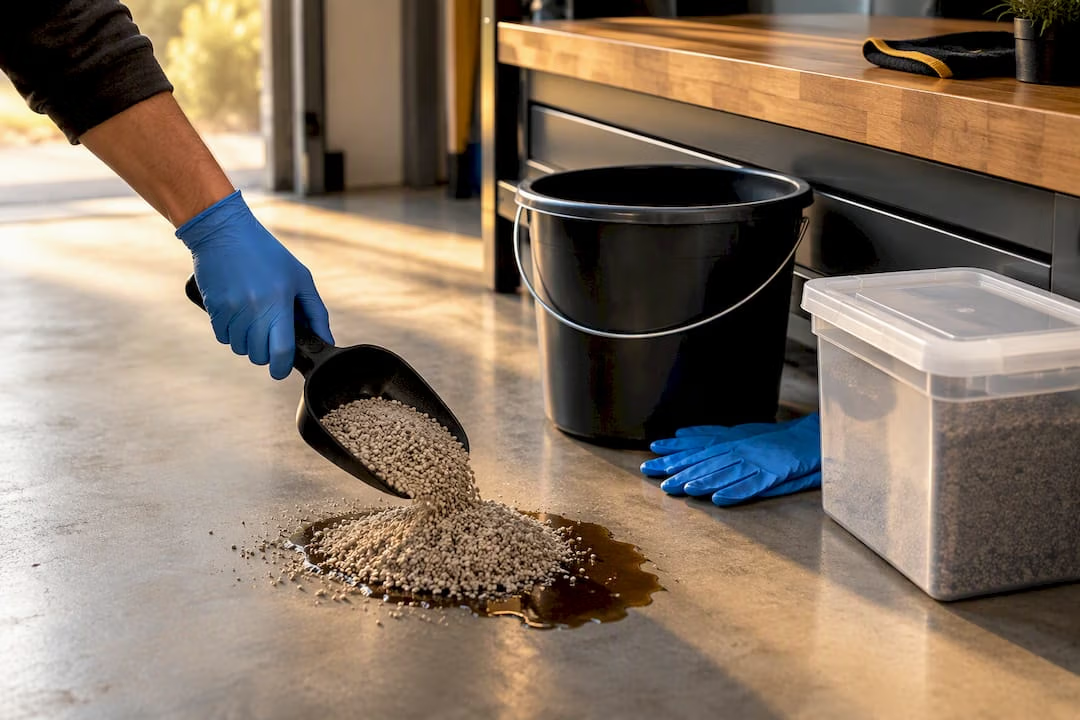
- Contain the puddle. Ring it with an absorbent like sand, cat litter, or diatomaceous earth so it can’t spread toward a floor drain or garage door threshold.
- Collect the absorbent into a sealed, labeled container. Don’t leave it loose on the floor or toss it in household trash without checking local hazardous waste rules.
- Clean remaining residue. Once the bulk is gone, move to the wash step covered in the next section.
Never rinse a brake fluid spill toward a floor drain or driveway runoff. EPA guidance for shop-floor cleanup specifically warns against letting automotive fluids reach drains or groundwater, and most municipalities treat that as a reportable violation, not just bad practice.
Pro Tip: Keep a small bucket with nitrile gloves, a bag of cat litter, and a sealable container near your workbench. The three seconds it takes to grab that kit instead of running for paper towels is often the difference between a stain you can wipe away and one you’re sanding out next weekend.
How to Clean Brake Fluid Off an Epoxy Floor Without Making It Worse
Fresh spills and week-old stains call for different approaches, and using the wrong one on the wrong stain is how a lot of garage floors end up looking worse than the spill itself.
For a fluid still wet or less than an hour old:
- Blot up the excess with rags or paper towels. Don’t wipe in wide circles. Work inward.
- Wash the area with warm water and a mild dish detergent, not a degreaser yet.
- Rinse with clean water and dry completely. That’s usually the entire job for a spill caught early.
For a stain that’s set in for a day or longer, you’ll need something stronger, but “stronger” doesn’t mean reaching for the harshest bottle on the shelf.
- Use a degreaser specifically labeled safe for epoxy or polyaspartic coatings. Apply it, let it sit per the product’s instructions, then agitate gently with a soft nylon brush.
- For a stubborn discoloration, try a poultice method: mix the degreaser into an absorbent paste (baking soda works), spread it over the stain, cover with plastic, and let it draw the residue out overnight.
- Repeat the brush-and-rinse cycle two or three times if needed. Older glycol stains often lift gradually rather than all at once.
A practical cleaning routine guide covers the same soft-brush, repeat-application approach for tough automotive stains, and it holds up well as a general reference regardless of where you’re doing the work.
What to avoid entirely: brake cleaner, acetone, and other strong solvents. These products are built to strip grease and grime fast, and that same aggressiveness attacks epoxy resin. A stain that looks stubborn is still cosmetic damage you can work through with patience. A floor softened by brake cleaner is a repair job.
Forum threads are full of homeowners who reached for brake cleaner on a small stain, watched it seem to work, and then discovered a dull or slightly tacky patch a week later once the solvent finished its work below the surface. That’s the pattern worth remembering: apparent success on day one doesn’t mean the coating is fine.
Always test first. Pick an inconspicuous corner, apply your cleaner of choice, wait the full recommended dwell time, and check the surface for softening, dulling, or color change before you treat the visible stain. Photograph the test patch. If it holds up clean, you’re good to proceed on the real spot.

Is It Just a Stain, or Is the Coating Actually Damaged?
Not every mark left behind is a coating failure, and figuring out which one you’re looking at determines whether you spend twenty minutes with a brush or a weekend with a sander.
Signs you’re dealing with cosmetic staining only:
The surface feels smooth and uniform when you run a hand across it. There’s no texture change, no soft spot, and the color difference sits flat against the coating rather than looking raised or sunken.
Signs the coating itself has been chemically attacked:
- Tackiness. If the spot feels slightly sticky or soft compared to the surrounding floor days after cleanup, the resin has been compromised.
- Bubbling or blistering. Small raised bubbles mean the solvent worked underneath the topcoat and disrupted adhesion.
- Flaking or lifting at the edges. Once you see the coating peeling at a corner, that’s mechanical failure, not staining.
If you catch any of those signs, stop cleaning that spot immediately.
Small, isolated spot repairs are within reach for a patient DIYer: light sanding down to sound substrate, thorough cleaning, then spot-priming and recoating with a matched product. The catch is that matching sheen, color, and texture on a spot repair is harder than it sounds, and mismatched patches are often more visible than the original stain.
Call a professional when:
- Adhesion loss covers more than a small localized area
- Bubbling appears in multiple spots or keeps spreading
- The floor is under warranty and unauthorized repair work could void coverage
- Appearance matters and you want a seamless match rather than a visible patch
Professional recoat work starts with the same diamond grinding and moisture testing used in original installations, which is why installer repairs tend to outlast DIY patch jobs. Epoxy performance studies back this up: substrate moisture and preparation quality directly affect how long a repair holds before failing again.
Preventing Brake Fluid Damage Before It Starts
The best defense against a ruined floor isn’t a better cleaner. It’s a floor that gives you more time to react and habits that catch spills early.
Installer-grade materials that buy you time:
- Mechanical diamond grinding creates a surface profile that lets primers bond mechanically, not just adhesively, which improves chemical resistance over the long run.
- Moisture testing before coating prevents the kind of vapor-driven adhesion failures that make a floor vulnerable to any liquid, brake fluid included.
- A polyaspartic topcoat is denser and more chemically stable than bare epoxy, which extends the window you have to clean a spill before it penetrates.
Shop habits that actually work:
- Keep a drip pan under any vehicle getting brake work done, not just an oil change.
- Use magnetic wheel drip shields when bleeding brakes on a lift or jack stands.
- Store an absorbent spill kit within arm’s reach of your workbench, not in a cabinet across the garage.
- Do a weekly visual sweep for new spots, since fresh stains are dramatically easier to fully remove than ones that have had a month to set.
Routine maintenance cleaning also matters more than most owners assume. A floor that gets a proper wash every few weeks resists staining better than one that only sees a mop after something spills, because ground-in dirt and grime create texture that traps liquids longer.
Pro Tip: If your garage sees frequent brake work, photograph and date any spill that sits for more than an hour, even if it looks fine after cleanup. That record matters if you ever need warranty service, since most coating warranties ask for prompt documentation rather than a claim filed months later.
Fast Action Beats Fancy Chemistry
Every case of real epoxy damage from brake fluid shares one root cause: the puddle sat too long before anyone dealt with it. The chemistry lesson matters, but it’s secondary to behavior. A basic spill kit within reach and a habit of checking the floor before you walk away from a brake job will prevent more damage than any specialty cleaner on the market.
Skip the temptation to reach for the strongest solvent in the cabinet the moment you see a stain. Contain first, test small, and give mild methods time to work before escalating.
— William
When to Bring in Precision Concrete Coating
If a spill has already left tackiness, bubbling, or a lifted edge, cleaning products won’t fix that. It’s an adhesion problem, and it calls for the same process a floor should have gotten the first time: real assessment, not a guess. Precision Concrete Coating in Conroe TX handles that assessment directly, checking moisture levels, mapping the extent of chemical damage, and grinding back to sound substrate before anything gets recoated.

Where a DIY patch relies on matching a store-bought epoxy kit by eye, a professional recoat uses the same mechanical diamond prep and moisture testing behind every original installation, which is what makes the repair blend in rather than stand out. That matters most on floors where a warranty is still active or where a visible patch would bother you every time you pull into the garage. For smaller cracks contributing to the problem, crack repair services address the structural issue before any coating goes back down.
Garage floor coating services from Precision Concrete Coating run $4.50 to $7.50 per square foot for a full installation, and that range depends on the coating system and prep work a given floor needs. If your garage has a persistent stain, a soft spot that won’t go away, or you’re just ready for a floor built to handle years of brake work without flinching, request an assessment through the garage floor coatings page and get a plan specific to your slab.
Sources
- Castrol Brake Fluid DOT 4 safety data sheet (SDS)
- Floor cleanup – Best environmental practices for auto repair and vehicle fleet maintenance (EPA)
FAQ
What Should You Not Clean Epoxy Floors With?
Avoid brake cleaner, acetone, and other strong solvents on finished epoxy, since these products can soften or strip the topcoat rather than just remove the stain. Stick to mild detergents for fresh spills and epoxy-safe degreasers for set-in stains, always testing on a hidden patch first.
How Long Does It Take for Brake Fluid to Damage Epoxy?
There’s no fixed countdown, but contact time is the dominant factor. A spill wiped up within minutes rarely causes lasting harm, while fluid left sitting for hours or overnight is far more likely to soften the coating, according to SDS guidance on glycol-based fluids.
Can I Remove Old Brake Fluid Stains From My Epoxy Garage Floor?
Older stains often respond to an epoxy-safe degreaser combined with gentle brushing, sometimes repeated over a few sessions, or a poultice method that draws residue out overnight. If the coating itself has softened or lifted rather than just discolored, cleaning won’t reverse it, and a spot repair or recoat becomes the realistic fix.
Will Brake Fluid Break Down Epoxy Used for Concrete Repair?
Epoxy-based crack fillers and structural repair products share similar resin chemistry to floor coatings, so the same risk applies. Prolonged brake fluid contact can compromise the surface of an epoxy repair the same way it affects a full coating, which is why containment and quick cleanup matter regardless of which epoxy product is on your floor.
Does a Brake Fluid Stain Void My Garage Floor Warranty?
That depends on the specific warranty terms and how the incident is handled, but most coating warranties expect prompt cleanup and documentation rather than delayed action. Photographing the spill and contacting your installer early is the safer path if you want to preserve warranty coverage on a Precision Concrete Coating installation or any professionally installed floor.
One Response