
{
“@graph”: [
{
“@type”: “Article”,
“image”: {
“url”: “https://csuxjmfbwmkxiegfpljm.supabase.co/storage/v1/object/public/blog-images/organization-40763/1786700562473_Pressure-washing-driveway-and-garage-floor.jpeg”,
“@type”: “ImageObject”,
“caption”: “Pressure washing driveway and garage floor”
},
“author”: {
“url”: “https://precision-concretecoating.com”,
“name”: “Precision Concrete Coating in Conroe TX”,
“@type”: “Organization”
},
“headline”: “Curb Appeal Checklist for Home Sellers Before Listing”,
“publisher”: {
“url”: “https://precision-concretecoating.com”,
“name”: “Precision Concrete Coating in Conroe TX”,
“@type”: “Organization”
},
“inLanguage”: “en-US”,
“description”: “Boost your home’s sale price with this essential curb appeal checklist. Follow these eight simple tasks to attract buyers instantly!”,
“dateModified”: “2026-08-14T09:46:34.505Z”,
“datePublished”: “2026-08-14T09:46:34.505Z”
},
{
“@type”: “BreadcrumbList”,
“itemListElement”: [
{
“item”: “https://precision-concretecoating.com”,
“name”: “Precision Concrete Coating in Conroe TX”,
“@type”: “ListItem”,
“position”: 1
},
{
“item”: “https://precision-concretecoating.com/curb-appeal-checklist-for-home-sellers”,
“name”: “Curb Appeal Checklist for Home Sellers Before Listing”,
“@type”: “ListItem”,
“position”: 2
}
]
}
],
“@context”: “https://schema.org”
}

{
“@type”: “FAQPage”,
“@context”: “https://schema.org”,
“mainEntity”: [
{
“name”: “Does Curb Appeal Really Matter When Selling a House?”,
“@type”: “Question”,
“acceptedAnswer”: {
“text”: “Yes. Curb appeal can account for up to 7% of a home’s sale price, and that figure can climb to 14% in weaker housing markets, making exterior presentation one of the highest-leverage areas a seller can control.”,
“@type”: “Answer”
}
},
{
“name”: “What Is the 3-3-3 Rule in Real Estate?”,
“@type”: “Question”,
“acceptedAnswer”: {
“text”: “The 3-3-3 rule is informal seller guidance suggesting you tackle three tasks in the first three days after deciding to sell, then three more within three weeks, generally starting with quick exterior fixes before moving to bigger repairs. Definitions vary by agent, so treat it as a pacing framework rather than a fixed standard.”,
“@type”: “Answer”
}
},
{
“name”: “What Is the Hardest Month to Sell a House?”,
“@type”: “Question”,
“acceptedAnswer”: {
“text”: “Winter months, particularly December and January, tend to see the slowest home sales in most U.S. markets due to holidays, colder weather, and fewer buyers actively touring homes. Curb appeal work like exterior lighting becomes more important during these months since more showings happen after dark.”,
“@type”: “Answer”
}
},
{
“name”: “What Should You Not Fix Before Selling Your House?”,
“@type”: “Question”,
“acceptedAnswer”: {
“text”: “Skip full kitchen or bathroom remodels, expensive landscape redesigns, and highly personalized upgrades, since these rarely recoup their cost and buyer taste varies widely. Focus instead on the defensive, high-ROI exterior fixes covered in this checklist: cracks, paint, cleaning, and the garage door.”,
“@type”: “Answer”
}
}
]
}
Eight tasks decide most of your curb appeal outcome, and none of them require a full landscaping crew. Buyers form a price opinion within seconds of pulling into the driveway, and research from the University of Texas at Arlington found that curb appeal alone can account for up to 7% of a home’s final sale price, climbing to 14% in soft markets. On a $299,000 home, that swing is worth $20,390 to $24,219 in real dollars. Do these first, in this order:
- Mow, edge, and clear the lawn — the fastest visual signal that the home is cared for.
- Pressure wash the driveway, walkway, and siding — removes years of grime buyers read as neglect.
- Clean or replace the front door and hardware — the single most photographed spot in any listing.
- Fix visible cracks in the driveway or walkway — trip hazards and eyesores buyers flag immediately.
- Refresh mulch beds and trim overgrown shrubs — cheap, fast, and visually transformative.
- Declutter the porch, yard, and garage — buyers need to picture their own stuff there, not yours.
- Update house numbers and mailbox — small hardware, disproportionate impact on first impressions.
- Test and replace exterior lighting — porch lights and path lights matter more than most sellers assume.
Here’s the time and cost reality for each: mowing, edging, and decluttering are same-day, no-cost jobs. Pressure washing and mulch refresh are weekend projects running $50 to $300 in rental or material costs. Door hardware, house numbers, and lighting fixtures land in the $20 to $150 range per item. Crack repair and driveway work vary widely, from a $40 DIY patch kit to several hundred dollars for professional resurfacing.
Key Takeaways
The highest-return curb appeal strategy fixes visible defects first, treats the entry and garage as top priority zones, and reserves big spending only for projects with proven resale ROI.
| Point | Details |
|---|---|
| Fix defects before decorating | Cracks, peeling paint, and broken fixtures signal neglect and should be repaired before any aesthetic upgrades. |
| Entry and garage matter most | The front door and garage floor get the most buyer attention and photo time of any exterior feature. |
| Garage door has the best ROI | Garage door replacement recoups 267.7% of cost, the highest of any project in Zonda’s Cost vs. Value report. |
| Cheap staging beats big remodels | Planters, mulch, and paint touch-ups often move buyer perception more than costly landscape overhauls. |
| Use the printable checklist | Work through same-day, weekend, and 1-2 week tasks first, then bring in contractors only for the remaining big jobs. |
Table of Contents
- Curb Appeal Checklist for Home Sellers: Quick Weekend Fixes
- How Do You Deep Clean an Exterior Before Selling?
- Landscaping Basics That Reliably Increase Curb Appeal
- Make the Front Entry Irresistible
- Driveway, Walkway, and Garage Fixes Buyers Notice
- Lighting and Security Improvements That Boost Evening Appeal
- Small Finishing Touches That Feel Polished
- Prioritizing Curb Appeal Tasks by Cost and ROI
- The One-Page Checklist You Can Print and Use
- Seasonal Considerations for Curb Appeal Improvements
- Common Pitfalls to Avoid in Curb Appeal Enhancement
- Seller Perspective: What Actually Moves Buyers
- Ready to Finish the Job Your Curb Appeal Started?
- Sources
- FAQ
Curb Appeal Checklist for Home Sellers: Quick Weekend Fixes
You don’t need two months before listing day. Most of what moves buyer perception can happen in a single Saturday and Sunday if you work in the right order.
- Mow and edge the lawn (30-45 minutes, no cost if you own equipment).
- Trim overgrown bushes away from windows and walkways (1-2 hours, no cost).
- Pressure wash the driveway and front walkway (2-3 hours, $40-$80 rental or free if borrowed).
- Wash all exterior-facing windows (1-2 hours, under $20 in supplies).
- Touch up chipped paint on trim, shutters, and the front door ($20-$60 in paint, half a day).
- Clear the driveway and porch of toys, tools, and bins (30 minutes, no cost).
- Replace a worn doormat with a neutral, classic style ($15-$40).
- Update faded or mismatched house numbers ($15-$50).
- Add two matching potted plants at the entry ($30-$80 depending on size).
- Refresh one mulch bed near the front entry ($20-$50 in bagged mulch).
HomeLight’s seller checklist recommends this exact combination of pressure washing, decluttering, and small repairs as the baseline for a show-ready exterior, and it’s a reasonable weekend workload for two people.
Pro Tip: Schedule your listing photos for late afternoon on a clear day, once the weekend work is done. Low-angle sunlight makes fresh mulch, a clean driveway, and a repainted door look noticeably richer than midday flat light.
How Do You Deep Clean an Exterior Before Selling?
Grime and small deferred repairs tell buyers a story you don’t want told: if the outside looks neglected, they assume the roof, HVAC, and plumbing have been neglected too. A thorough exterior clean and repair pass changes that story fast.
- Rent or hire a pressure washer rated for residential siding (1,300 to 1,900 PSI for vinyl or painted wood; lower for softer materials).
- Wash from the top down — start at the roofline and work toward the ground so dirty runoff doesn’t re-stain cleaned sections.
- Clean the driveway and walkways last, using a wider fan tip and a sweeping motion to lift oil stains and algae.
- Clear gutters of leaves and debris, checking for sagging sections or visible rust that signal drainage problems.
- Inspect the roof from ground level with binoculars for missing, curled, or discolored shingles.
- Check window and door screens for tears, and replace any that are visibly damaged.
- Touch up peeling or chipped paint on trim, fascia, and the front door before photos are taken.
HomeLight’s guide lists pressure washing, gutter cleaning, and shingle repair among the standard pre-listing tasks agents expect sellers to complete, and skipping them tends to show up in buyer questions during showings.
Pressure washing looks simple until it isn’t. Too much pressure on old wood siding, chalky painted brick, or aging stucco can strip paint, gouge soft material, or force water behind siding where it causes rot later. If your home has original siding older than 15 years, soft stucco, or any hairline cracks in mortar joints, hire a pro who can dial pressure down and use the right nozzle. The $150 to $300 you spend on a professional wash is cheaper than repainting an entire side of the house.
Landscaping Basics That Reliably Increase Curb Appeal
Buyers notice grass, edges, and plant health before they notice architecture. A quantitative analysis of home images confirmed that tidy lawns, clean landscaping lines, and an attractive entry measurably move automated price estimates, which lines up with what real estate agents have said for decades: yard care is not optional staging, it’s baseline expectation.
Run through this list before anything else in the yard:
- Mow the lawn and edge along the driveway, walkway, and flower beds.
- Pull visible weeds from beds, cracks, and the lawn edge.
- Trim any trees or shrubs blocking windows, the front door, or sightlines from the street.
- Apply a fresh, even layer of mulch (2-3 inches) to all visible beds.
- Remove dead plants and empty pots that read as abandoned rather than intentional.
- Add a border edge along beds for a cleaner, more finished line.
For plant choices, keep it simple and low-risk. In full sun, marigolds, zinnias, and knockout roses give reliable color with minimal upkeep. In partial shade, hostas and impatiens fill beds without demanding attention. If your budget is tight, skip individual bed plantings entirely and put your money into two or three large matching planters flanking the front door instead. It reads as intentional design rather than scattered gardening, and it’s the cheapest staging trick in this entire checklist.
Hire a landscaper only if the yard needs structural work like tree removal, drainage correction, or a full sod replacement. Everything on the list above is a reasonable DIY weekend for most sellers.
Make the Front Entry Irresistible
Your front door gets more camera time in listing photos than almost any other single feature of the house, and buyers register it emotionally before they register it rationally. Zillow’s research on home value drivers found that a black front door correlated with an average offer $6,450 higher than a gray one, which tells you paint color isn’t a cosmetic afterthought here.
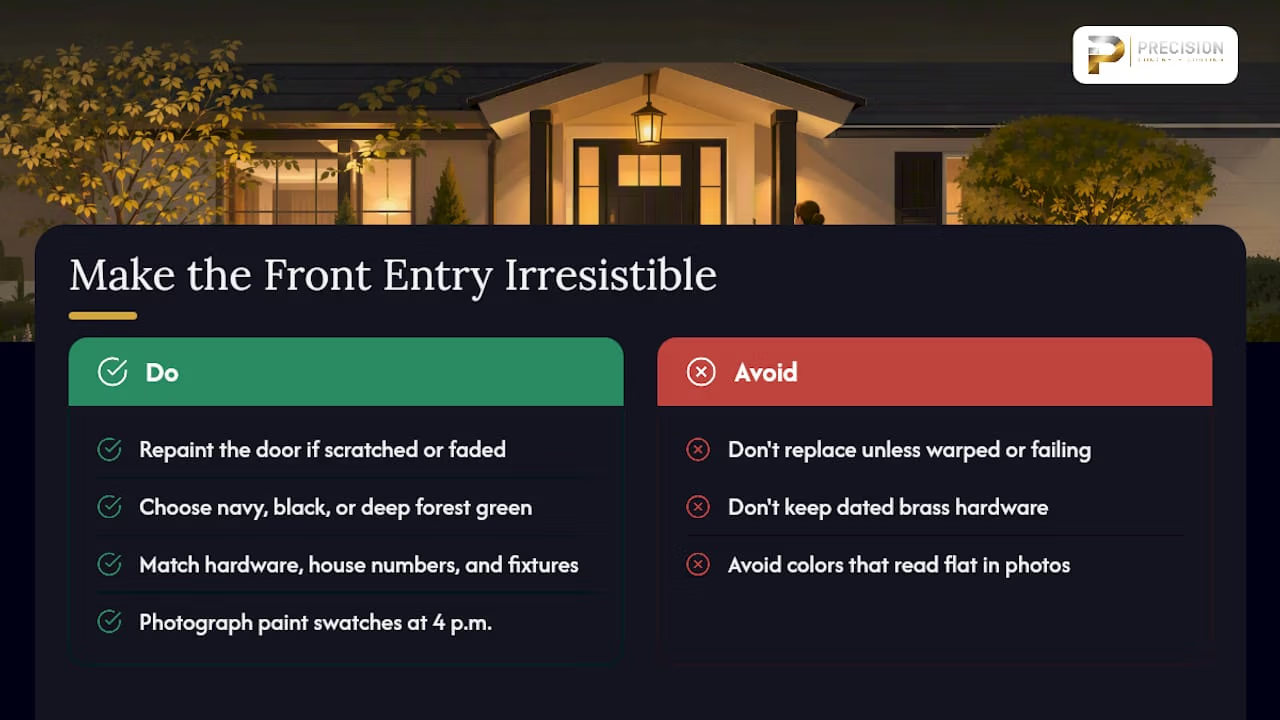
Start with the door itself. If it’s scratched, faded, or an outdated color, repaint it rather than replace it, unless it’s warped or the hardware is failing. Classic navy, black, or a deep forest green photograph well against nearly any siding color and read as updated without looking trendy. Swap dated brass hardware for matte black or brushed nickel, matching the finish to your house numbers and light fixtures so the entry feels coordinated rather than assembled piecemeal. Add a simple, neutral doormat, and if your porch light fixture is dated or dim, replace it with something clean-lined before you replace anything else in the yard.
A one-point increase in perceived attractiveness on a standard seven-point scale corresponded to a 7.7% jump in sale price in an empirical study of newer homes in the Dallas-Fort Worth area. The sample was small (59 houses), but the direction of the effect matches what agents see constantly: small, visible upgrades to the entry move buyer perception more than their material cost would suggest.
Pro Tip: If you’re unsure about door color, test it against your listing photos before committing. Take a phone photo of your house at 4 p.m., then hold paint swatches up in that same light. Colors that look elegant in a store often read flat or muddy against brick or vinyl siding until you see them in real daylight.
If your entry door itself needs full replacement rather than a repaint, door upgrade guidance from One Day Doors & Closets covers style options and what tends to hold value best.
Driveway, Walkway, and Garage Fixes Buyers Notice
The driveway and garage door are two of the largest visual surfaces on your property, and buyers evaluate them almost as carefully as the front door. Zonda’s Cost vs. Value report ranks garage door replacement as the single highest-ROI home improvement project nationally, recouping 267.7% of its cost at resale, which makes this section worth more attention than most sellers give it.
Work through this checklist before listing:
- Sweep and pressure wash the driveway to remove oil stains and grime.
- Fill or seal visible cracks wider than a quarter inch.
- Repaint or replace worn garage door trim and hardware.
- Clear the garage floor of boxes, tools, and stored items buyers will trip over during a showing.
- Repair uneven walkway pavers or sunken sections that create trip hazards.
- Touch up faded garage door paint if a full replacement isn’t in the budget.
Cost-wise, crack sealant kits run $15 to $40 and handle cosmetic cracks yourself in an afternoon. Full driveway resurfacing runs into the thousands and rarely pays for itself before a sale unless the surface is genuinely failing. Garage door replacement sits in a different category. Given its ROI ranking, a mid-range garage door swap, typically $1,000 to $4,000, is one of the few big-ticket exterior projects worth doing purely for resale math.
A cluttered or stained garage floor undercuts an otherwise strong exterior fast, since it’s often the first interior space buyers see after admiring the outside. A clean, crack-free garage floor changes that impression immediately, and our guide on how garage floor coatings affect home value walks through what a finished floor communicates to buyers touring the space.
Pro Tip: Walk your own driveway and walkway barefoot before listing. Uneven pavers, sharp crack edges, and loose stepping stones you’ve stopped noticing are exactly what a buyer’s inspector, and their liability instincts, will flag first.
Lighting and Security Improvements That Boost Evening Appeal
Showings don’t all happen in daylight, and a dark, poorly lit exterior reads as neglected or unsafe even when the house itself is in great shape. Lighting also does double duty: it improves how the home photographs at dusk, which matters because many listing photo packages include a twilight shot specifically to make the home stand out online.
Work through this list:
- Test every existing porch and exterior light, replacing burned-out bulbs immediately.
- Swap mismatched bulb colors for a single warm white temperature across all fixtures.
- Add solar or low-voltage pathway lights along the walkway to the front door.
- Install a motion-sensor floodlight near the garage or side entry if the area is currently dark.
- Set porch lights on a timer so they turn on automatically before evening showings.
The safety perception matters as much as the aesthetics. A well-lit path signals a home that’s been maintained and looked after, reinforcing the same impression a Coldwell Banker analysis describes: buyers read curb appeal as a proxy for how well the underlying systems have been maintained, and exterior lighting is part of that signal.
Pro Tip: Stick to one bulb color temperature (2700K to 3000K warm white) across every exterior fixture. Mixed temperatures, one bluish LED next to a yellow incandescent, look cheap in photos even when each individual fixture works fine.
If any upgrade requires new wiring, a dedicated circuit, or a hardwired floodlight rather than a plug-in or battery unit, bring in a licensed electrician. Solar and battery-powered path lights are safe DIY territory; anything touching your home’s electrical panel is not.
Small Finishing Touches That Feel Polished
The last layer of curb appeal work is the cheapest and easiest to skip, which is exactly why it stands out when done well. These are the details that don’t fix a problem so much as they signal care.
- Place two matching planters symmetrically on either side of the front door.
- Replace a rusted, dented, or leaning mailbox with a clean, simple model.
- Add one small seasonal touch, like a wreath, but keep it understated rather than themed.
- Wipe down and arrange porch furniture, or remove it entirely if it’s worn or mismatched.
- Tidy pet areas, food bowls, and yard toys before every showing.
- Remove garden gnomes, flags, or strongly personal decor items from the front yard.
The goal here is neutralization, not decoration. The UT Arlington curb appeal study specifically flags overly personalized or kitschy exterior items as a drag on buyer perception, because they make it harder for a stranger to picture the house as theirs. A wind chime collection or a lawn full of decorative statues might feel like home to you; to a buyer touring six houses in one afternoon, it reads as clutter to mentally edit out.
Pro Tip: Before every showing, do a 60-second “stranger walk” from the curb to the front door and ask what a first-time visitor would notice. If the answer is anything other than a clean, welcoming entry, fix that one thing before the next showing.
Prioritizing Curb Appeal Tasks by Cost and ROI
Not every task on this checklist deserves equal time or money. The smartest approach fixes defensive problems first, the kind that make buyers question maintenance, before spending on purely aesthetic upgrades.
Start with anything that signals disrepair: cracked driveways, a dented garage door, peeling paint, or broken gutters. These read as red flags that trigger buyer skepticism about what else might be wrong. Only after those are handled does it make sense to add aesthetic layers like fresh mulch, new planters, or updated hardware. Exterior upgrade analysis from The Spruce reinforces this order, noting that exterior projects consistently outperform interior renovations for resale ROI, likely because exterior quality is objective and easy for buyers to assess at a glance, while interior taste is far more subjective.
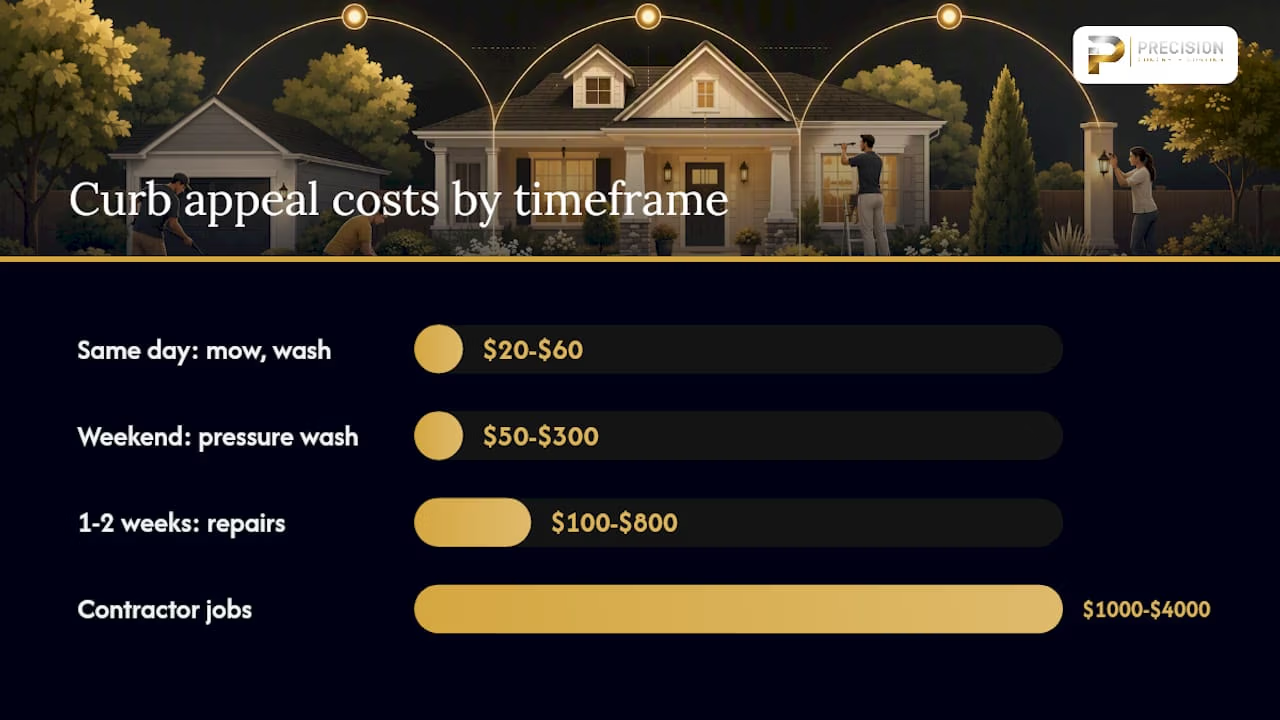
| Timeframe | Typical tasks | Estimated cost |
|---|---|---|
| Same day | Mow, edge, declutter, wash windows | $20-$60 |
| Weekend | Pressure wash, mulch refresh, paint touch-ups, doormat | $50-$300 |
| 1-2 weeks | Crack repair, hardware updates, lighting fixtures | $100-$800 |
| Contractor jobs | Garage door replacement, roof repair, driveway resurfacing | $1,000-$4,000 |
ROI figures vary by region, since Zonda’s data covers 119 individual U.S. markets rather than a single national number, so check local figures or ask your listing agent before committing to a big-ticket project.
Curb appeal’s price impact is well documented: it can represent up to 7% of sale price nationally, rising to 14% in weaker markets, which is why the defensive fixes above deserve first priority over anything purely decorative.
The One-Page Checklist You Can Print and Use
Organize your work into four phases so nothing gets missed and nothing gets over-scheduled.
Same day (free to $30):
- [ ] Mow and edge the lawn
- [ ] Declutter porch, driveway, and yard
- [ ] Wash exterior-facing windows
- [ ] Clear gutters of visible debris
Weekend ($50-$300):
- [ ] Pressure wash driveway, walkway, and siding
- [ ] Refresh mulch beds
- [ ] Touch up chipped paint on trim and door
- [ ] Replace doormat and house numbers
- [ ] Add matching entry planters
1-2 weeks ($100-$800):
- [ ] Repair driveway or walkway cracks
- [ ] Update door hardware and light fixtures
- [ ] Install pathway or motion-sensor lighting
- [ ] Trim trees and shrubs blocking sightlines
Contractor jobs ($1,000+):
- [ ] Garage door replacement (hire a garage door installer)
- [ ] Roof repair or shingle replacement (hire a licensed roofer)
- [ ] Driveway resurfacing (hire a concrete or asphalt contractor)
- [ ] Electrical work for hardwired lighting (hire a licensed electrician)
Adjust for the season you’re listing in. Spring listings benefit most from flowering plants and lawn recovery from winter dormancy. Fall listings should focus on gutter clearing and leaf removal, since a yard buried in leaves photographs poorly no matter how nice the landscaping underneath actually is.
Seasonal Considerations for Curb Appeal Improvements
Timing changes which tasks matter most. In spring, lawns are recovering from winter and flower beds can look patchy until new growth fills in, so lean on mulch and container plants for instant color while grass catches up. Summer listings deal with heat stress on lawns and faster weed growth, which means more frequent mowing and watering discipline in the weeks before showings.
Fall shifts priorities toward gutter maintenance and leaf management, since a yard covered in debris undercuts even excellent landscaping underneath it. Winter listings in most climates rely more heavily on lighting, since shorter days mean more showings happen after dark, and evergreen structure, since flowering plants aren’t an option. A clean, well-lit entry matters more in January than a perfect lawn does, simply because fewer buyers will see the lawn in daylight.
Whatever season you’re listing in, match your spending to what buyers will actually see. There’s little return in planting spring annuals for a December listing.
Common Pitfalls to Avoid in Curb Appeal Enhancement
The biggest mistake sellers make is over-personalizing instead of neutralizing. A yard full of garden statues, a bold accent color that reflects personal taste, or elaborate seasonal decorations might feel like home improvement to you, but it works against you with buyers trying to picture their own life in the space.
The second mistake is spending on high-cost, low-ROI projects while ignoring cheap defensive fixes. A full landscape redesign costing several thousand dollars rarely outperforms a $50 pressure wash and a $30 paint touch-up in terms of dollars returned per dollar spent. Spend on visible problems first.
The third mistake is DIY pressure washing on surfaces that can’t handle it. Old siding, soft stucco, and aging mortar joints get damaged by high-pressure equipment in inexperienced hands, turning a cheap weekend fix into an expensive repair.
Finally, sellers often skip the garage entirely, treating it as storage rather than showable space. A cluttered garage with a stained, cracked floor undermines the clean exterior you just spent a weekend creating, especially since many buyers walk straight from the driveway into the garage during a showing.
Seller Perspective: What Actually Moves Buyers
Most curb appeal advice treats every dollar spent as equally valuable, and that’s where sellers waste money. The data is consistent: exterior maintenance signals matter more than exterior style choices. Buyers forgive a plain lawn faster than they forgive a cracked driveway, because a plain lawn reads as a taste difference and a cracked driveway reads as a maintenance question mark.
The garage is the most underrated space in this entire checklist. Sellers pour money into landscaping and paint, then leave a stained, dusty concrete floor as the first thing buyers see when they peek into the garage during a showing. That contrast is jarring, and it costs you the momentum you just built with a clean front yard. At Precision Concrete Coating in Conroe TX, the work centers on mechanical surface preparation before any coating goes down, because a coating applied over dust and laitance fails fast and looks worse than bare concrete within a year. A properly prepared and coated floor, backed by a 15-year residential warranty, changes that garage from an afterthought into another finished space a buyer notices favorably.
If your garage floor has visible cracks, staining, or pitting, that’s worth fixing before listing, not after an inspection flags it. A quick, honest look at surface preparation for garage floor coatings explains why the prep work, not just the topcoat, determines whether the finished floor actually holds up and photographs well.
Pro Tip: If your garage floor is stained or cracked but you’re not ready for a full coating project, at minimum clean it thoroughly and store items on shelving rather than the floor. A clear, swept floor photographs dramatically better than a cluttered one, even before any coating work happens.
Ready to Finish the Job Your Curb Appeal Started?
Everything above gets your exterior and entry buyer-ready in a weekend or two. The garage is the one space that often needs a professional hand, especially if the floor has cracks, staining, or years of oil absorption that pressure washing won’t fix. Precision Concrete Coating in Conroe TX handles the full process, from mechanical diamond surface preparation through crack repair and UV-stable polyaspartic topcoats, backed by a 15-year residential warranty that outlasts most other coating options homeowners consider before a sale. See real results from a recent project in the Granger Pines garage floor coating case study, and if you’re weighing whether the investment makes sense before listing, a written estimate is the fastest way to find out.
Sources
- The cost of curb appeal? Study says 7%. – News Center – The University of Texas at Arlington
- An Empirical Analysis of Effect of Housing Curb Appeal on Sales Price of Newer Houses – UNT Digital Library
- ZONDA’S 38th ANNUAL COST VS. VALUE REPORT CONFIRMS EXTERIOR PROJECTS CONTINUE TO DELIVER THE HIGHEST ROI
- How to get a house ready to sell checklist for inside your home – HomeLight
- Home improvements that increase value – Zillow
FAQ
Does Curb Appeal Really Matter When Selling a House?
Yes. Curb appeal can account for up to 7% of a home’s sale price, and that figure can climb to 14% in weaker housing markets, making exterior presentation one of the highest-leverage areas a seller can control.
What Is the 3-3-3 Rule in Real Estate?
The 3-3-3 rule is informal seller guidance suggesting you tackle three tasks in the first three days after deciding to sell, then three more within three weeks, generally starting with quick exterior fixes before moving to bigger repairs. Definitions vary by agent, so treat it as a pacing framework rather than a fixed standard.
What Is the Hardest Month to Sell a House?
Winter months, particularly December and January, tend to see the slowest home sales in most U.S. markets due to holidays, colder weather, and fewer buyers actively touring homes. Curb appeal work like exterior lighting becomes more important during these months since more showings happen after dark.
What Should You Not Fix Before Selling Your House?
Skip full kitchen or bathroom remodels, expensive landscape redesigns, and highly personalized upgrades, since these rarely recoup their cost and buyer taste varies widely. Focus instead on the defensive, high-ROI exterior fixes covered in this checklist: cracks, paint, cleaning, and the garage door.