Why long-lasting floor coatings cut your maintenance load dramatically
The core advantage of a quality floor coating is simple: it turns a porous, stain-prone concrete slab into a sealed, cleanable surface that holds up for decades instead of years. Epoxy flooring and polyurea polyaspartic coatings are the two systems worth knowing. Epoxy bonds chemically with concrete to create a hard, seamless layer, while polyurea polyaspartic goes further by adding UV stability and flexibility that epoxy lacks. Professionally installed polyurea polyaspartic coatings last 15–25+ years, compared to 5–10 years for epoxy systems. Concrete paint, by contrast, typically fails in a garage within 1–2 years.
The long lasting floor coating maintenance benefits show up immediately after installation:
- Sealed, non-porous surface blocks stains before they penetrate
- Moisture vapor is managed at the system level, preventing peeling
- Chemical spills wipe clean instead of soaking in
- Dust generation drops sharply, improving indoor air quality
- Routine cleaning shrinks to sweeping and occasional mopping
Pro Tip: Polyurea polyaspartic coatings cure quickly, in about a day, versus several days for epoxy. If you manage a facility or a busy household garage, that faster return to service matters more than most people realize.
1. How coatings seal surface porosity to prevent stains
Bare concrete is essentially a sponge. Motor oil, brake fluid, and even spilled coffee sink into the pores within minutes, leaving stains that no amount of scrubbing fully removes. A professionally applied coating fills and seals those pores, creating a continuous film that stops contaminants at the surface.
The practical difference is immediate. Automotive fluids that would permanently discolor bare concrete simply bead up on a coated floor and wipe away with a rag. The same goes for household chemicals, road salt tracked in on tires, and food spills in commercial kitchens. Epoxy flooring creates a hard, seamless layer that resists most common contaminants, while polyurea’s non-porous barrier handles even aggressive chemicals like gasoline and antifreeze without softening or staining.
- Stains from oil, grease, and brake fluid stay on the surface and wipe clean
- Road salt and de-icing chemicals cannot penetrate to corrode the slab
- No grout lines or seams where grime accumulates
- Appearance stays consistent far longer than painted or bare concrete
Concrete paint offers none of this. It sits on top of the slab rather than bonding to it, so it provides almost no barrier against penetrative stains. Understanding why coatings outlast paint comes down to that bond depth and film thickness.
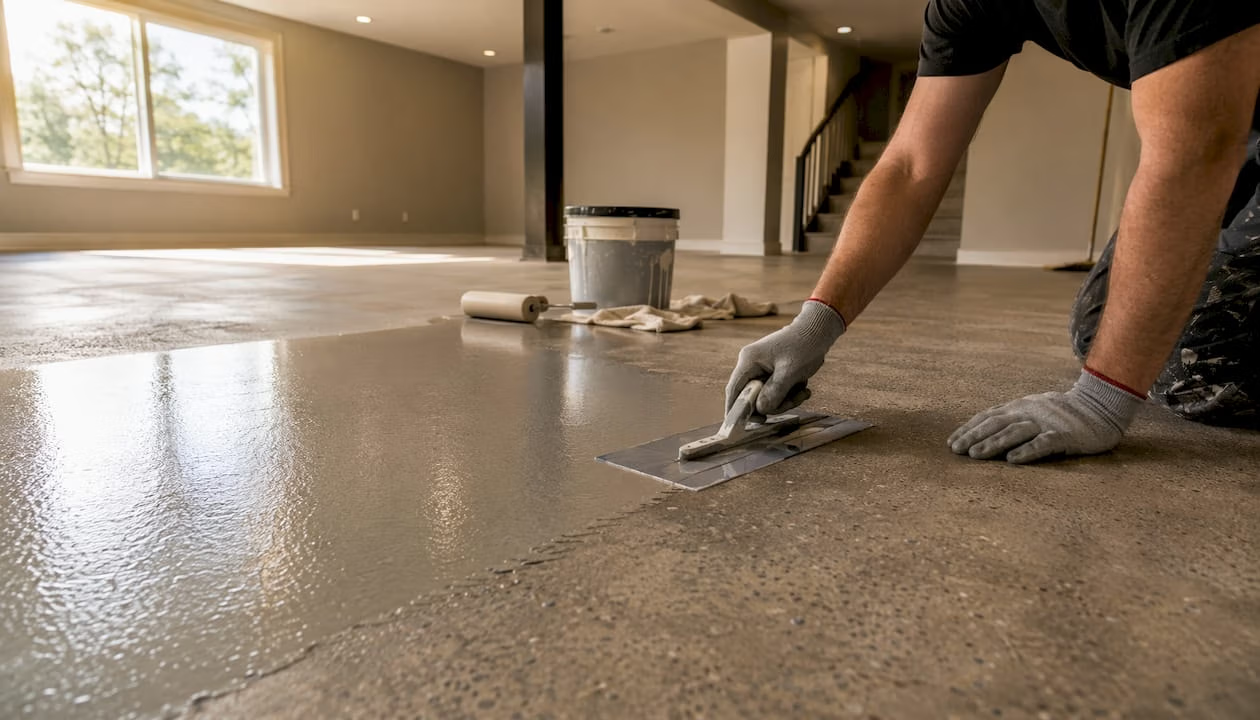
2. How coatings protect against dust, moisture, and chemical damage
Uncoated concrete sheds fine particles constantly, a process called concrete dusting. Every footstep and tire pass grinds the surface slightly, releasing silica-laden dust that settles on everything in the space. A sealed coating stops this at the source. According to the EPA, indoor air can be 2–5 times more polluted than outdoor air, and concrete dust is a direct contributor in garages and commercial spaces.
Moisture is the other major threat. Concrete slabs transmit water vapor upward from the ground, and when that vapor hits a rigid coating from below, it causes bond failures and peeling. Professional multi-layer systems address this with specialized moisture-mitigating primers that manage vapor transmission before it becomes a problem. Paint films have no such mechanism, which is why painted garage floors in humid climates bubble and peel within a season.
- Dust generation drops sharply once the slab is sealed
- Moisture vapor management prevents lifting and delamination
- Chemical resistance covers oil, brake fluid, cleaning agents, and solvents
- Reduced dust means fewer allergens and less respiratory irritation indoors
Polyurea polyaspartic coatings also resist UV degradation, which is a real issue in Texas garages where doors stay open for hours. Traditional epoxy yellows and becomes brittle under prolonged sunlight exposure. Polyurea holds its color and flexibility for an extended period in direct sun, which matters both for appearance and for the structural integrity of the coating itself.
3. How coatings handle wear, impact, and simplify daily upkeep
Polyurea is four times stronger than epoxy and ten times more flexible. That flexibility is not a minor technical detail. Concrete expands and contracts with temperature changes, and a rigid coating cracks or delaminates when the slab moves. Polyurea flexes with the substrate, so the coating stays intact through Texas summers and cold snaps alike.
Dropped tools, rolling shop equipment, and heavy foot traffic are daily realities in a working garage or commercial facility. A thick polyurea system absorbs those impacts without chipping. Epoxy flooring handles moderate wear well but can chip under sharp impacts, particularly if the surface preparation was not thorough enough to create a deep mechanical bond. Mechanical diamond grinding during installation is what allows coatings to chemically attach to concrete rather than simply resting on top of it, which is the difference between a coating that lasts two decades and one that delaminates in two years.
- Impact resistance prevents chipping from dropped tools and equipment
- Flexibility stops cracking caused by concrete movement
- No stripping, waxing, or frequent recoating cycles
- Reduced maintenance labor and chemical use compared to traditional floors
The warranty backing a quality installation reflects this durability directly. Precision-concretecoating backs its polyaspartic systems with a residential warranty covering peeling, delamination, and hot tire pickup. That kind of warranty backed floor coating value is only possible when the installation process, from surface prep through topcoat, is done correctly.
4. Proven maintenance tips that extend your coating’s life
Keeping a coated floor in top condition is genuinely straightforward, but a few specific habits make the difference between a coating that hits its full service life and one that fades early.
Daily and weekly care:
- Sweep with a soft-bristle broom or dust mop to remove grit before it can abrade the surface
- Mop weekly with a neutral pH cleaner; avoid acidic or alkaline products that gradually dull the finish
- Wipe up spills immediately, especially automotive fluids, to preserve both appearance and surface integrity
Protecting the surface:
- Place soft felt or rubber pads under furniture legs and heavy equipment stands
- Avoid dragging metal objects directly across the floor
- Use walk-off mats at entry points to trap grit before it reaches the coated area
Inspections and warranty protection:
Regular inspections catch minor damage before it spreads. Match the frequency to how hard the space works: light-use residential garages need a check every 6–12 months, while high-traffic commercial floors benefit from a look every 3–6 months. Catching a small chip or edge lift early costs almost nothing to address. Ignoring it until the damage spreads can void warranty coverage and require a full recoat.
Proper maintenance also preserves the environmental benefits of a long-lasting system. A coating that lasts 20 years instead of being replaced every 2–3 years means far less material waste, fewer chemical stripping agents, and less labor over the floor’s lifetime. For facility managers tracking sustainability metrics, that lifecycle reduction is worth documenting. For homeowners, it simply means less time on your knees with a scrub brush. Pairing these habits with guidance on stone flooring maintenance can sharpen your overall floor care approach across different surface types.
Pro Tip: Never use a steam cleaner or high-pressure washer on a coated floor. The heat and force can lift the topcoat at edges and seams, voiding your warranty and creating entry points for moisture.
Is a professional coating worth it for your garage or facility?

Precision-concretecoating installs premium polyaspartic systems in Conroe, TX, and surrounding areas, backed by a 15-year residential warranty. Every project starts with diamond grinding for a proper mechanical bond, includes crack repair where needed, and finishes with a UV-stable polyaspartic topcoat that handles Texas heat, humidity, and heavy use. If you want a floor that genuinely reduces your cleaning and upkeep for the next two decades, get a free quote today.
Key Takeaways
Long-lasting floor coatings like polyurea polyaspartic systems deliver the strongest maintenance and durability advantages when professionally installed with proper surface preparation and consistent care.
| Point | Details |
|---|---|
| Coating lifespan vs. paint | Polyurea polyaspartic coatings last 15–25+ years; concrete paint fails in 1–2 years under garage conditions. |
| Porosity sealing | A sealed, non-porous surface stops oil, brake fluid, and road salt from penetrating the slab. |
| Moisture and dust control | Multi-layer systems manage vapor transmission and eliminate concrete dusting, improving indoor air quality. |
| Maintenance simplicity | Neutral pH mopping and prompt spill cleanup are all routine care requires; no waxing or recoating cycles. |
| Warranty protection | Regular inspections and avoiding harsh chemicals preserve warranty validity and extend coating service life. |
4 Responses