Epoxy over tile garage floors works only when the tiles are tight, flat, and sitting on a slab with acceptable moisture. We at Precision Concrete Coating follow the moisture guidance in ACI PRC-302.2-22, and we usually grind the tile surface or pull the tile out first. A professional on-site evaluation is the safest next step before you buy any materials.
TL;DR:
- Tap each tile and check grout, flatness, stains, and damp signs; loose tiles, heavy lippage, or recurring moisture call for removal and releveling.
- Ask installers to diamond grind glazed tile, repair damaged grout, and apply a small adhesion test patch before coating the entire floor.
- Require in situ relative humidity or calcium chloride testing, written acceptance criteria, and documented mitigation if readings are high; DIY checks cannot replace professional results.
- Thin epoxy can show grout lines and tile edges, while thicker overlays conceal them but cannot stabilize loose tiles; bare concrete often lasts longer.
- Published coating estimates run from $4.50 to $7.50 per square foot, while removal, leveling, moisture treatment, system choice, and warranty affect the final price.
Table of Contents
- Can you keep your tile, or should it come out?
- What prep does an installer need to do before coating tile?
- How does moisture ruin a coating, and how is it tested?
- Which coating system fits, and when does tile have to go?
- What does an epoxy-over-tile project cost, and how long does it take?
- What should you ask a pro before hiring?
- Why we put preparation ahead of everything else
- What we offer if you want the prep done right
- FAQ
- Sources
Can you keep your tile, or should it come out?
Start with a quick walk-through of your garage. Most of these checks take little time and no special tools, and they tell you whether to move on to moisture testing or plan for removal.
- Adhesion: Tap every tile with a rubber mallet or the handle of a screwdriver. A hollow sound or a tile that rocks means the bond has failed.
- Flatness: Run your hand across the floor and look for lippage, where one tile edge sits higher than its neighbor, or tiles that curl at the corners.
- Contamination: Oil stains, old paint, and silicone residue block bonding and are hard to remove from glazed tile.
- Grout condition: Crumbling, sunken, or missing grout lets moisture and movement reach the coating.
- Moisture history: White mineral deposits called efflorescence, damp patches after rain, or a record of wet slabs are warning signs.
One or two minor flaws can be repaired. If you find loose tiles, heavy lippage, or signs of dampness, plan on removal and re-leveling instead of coating over the problem. Our comparison of garage floor options shows how the alternatives stack up.
What prep does an installer need to do before coating tile?
Prep decides how long the floor lasts. Expect your installer to follow steps like these and to document them:
- Clean and degrease. A detergent wash removes dirt, and a solvent pass handles oil and grease that soap leaves behind.
- Profile the surface mechanically. Diamond grinding is the preferred method because it dulls the glaze and gives the coating something to grip. Acid etching and light sanding often fall short on glazed tile.
- Repair grout and damaged areas. Crumbling grout and missing tiles are filled with polymer-modified mortar or epoxy mortar so the surface is solid and level.
- Run an adhesion test patch. A small coated test area shows whether the bond holds before the whole floor is committed.
- Control the environment. Keep temperature in the manufacturer’s range, ventilate the space, and respect the wait times between coats. Airflow matters even more in a closed space, as we explain in our guide to epoxy in an attached garage.
Pro Tip: Ask to see the ground surface before any coating goes down. Glazed tile that still looks shiny after grinding has not been profiled enough.
Contract-style specifications such as the University of Houston epoxy master spec show the same pattern: crack injection, epoxy mortar patching, and overlay systems are all installed per manufacturer instructions and recognized ASTM and ACI standards.
How does moisture ruin a coating, and how is it tested?
A garage slab can pass water vapor upward for years without any visible sign. ACI PRC-302.2-22 addresses this directly: it covers moisture testing, relative humidity, and vapor retarders for slabs that receive coatings like epoxy. When vapor pushes through a coating that cannot breathe, you get osmotic blisters and a bond that lets go.
The success of moisture-sensitive flooring, epoxy included, depends on the moisture condition of the concrete substrate, and excessive vapor emission can cause osmotic blistering and bond failure, according to ACI PRC-302.2-22.
Professionals rely on common moisture tests:
- In-situ relative humidity: Probes are set into the slab to read moisture inside the concrete, not just at the surface.
- Calcium chloride (MVER) testing: A sealed dish measures how much vapor leaves the surface over a set period.
Watch for efflorescence, damp spots, and chalky residue. A Concrete International Q&A, Vapor Is the Trojan Horse of Moisture in Concrete Slabs, makes the same point: vapor movement is a common cause of flooring failures. If readings come back high, the fix is documented mitigation, tested before any topcoat, or removing the tile. You can run a rough check yourself with our DIY moisture tests, but they do not replace professional readings.
Which coating system fits, and when does tile have to go?
Several system types are commonly used:
- Thin topical epoxy: Mostly cosmetic and the most sensitive to bond problems underneath.
- Epoxy mortar overlay: Thicker and tougher, but it needs a solid, stable substrate.
- Polyaspartic topcoat: Cures fast and resists UV fading, which suits garages with sunlit doors.
A thin coat will show every grout line and tile edge unless the surface is filled and leveled first. Thicker overlays hide more but cannot fix loose tile.
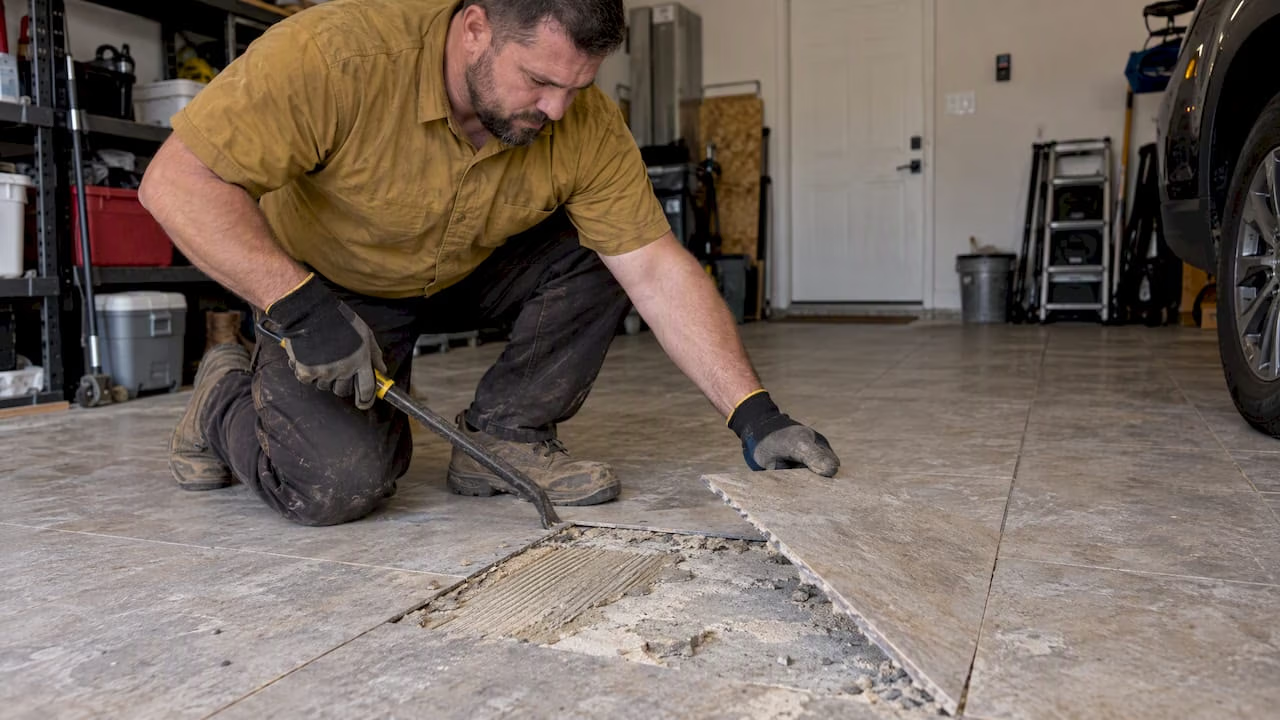
Removal is the better call when tiles are loose, the floor is uneven beyond what filling can correct, or moisture keeps coming back. A fresh overlay on bare concrete usually outlasts a coating that is bridging over old tile.
What does an epoxy-over-tile project cost, and how long does it take?
We publish ballpark ranges on our coating cost and estimate page: garage floor coatings run $4.50-7.50 per sq ft. Where your job lands depends on:
- Prep intensity: Grinding alone costs less than tile removal and re-leveling.
- Moisture mitigation: Testing and treatment add time and money.
- System type: Flake, solid epoxy, and polyaspartic each price differently.
- Square footage: A larger garage is a bigger job than a single bay.
- Warranty terms: Longer coverage usually reflects more thorough prep.
For schedule, plan on an inspection and testing visit first. Prep time depends on the scope of the work. After that come the coating layers and flake broadcast, then cure time before light foot traffic and driving. Cutting corners on prep saves money on day one and costs far more when the coating peels.
What should you ask a pro before hiring?
Use this list when you compare installers:
- Ask for written moisture test results and the acceptance criteria used.
- Ask how the tile surface will be profiled, and confirm it is diamond grinding.
- Ask how grout and damaged tiles will be repaired.
- Request a written scope showing primer, broadcast flakes, topcoat, materials, and cure times.
- Expect a small adhesion test patch, photos of the prep, and copies of the humidity or MVER readings.
- Get the warranty in writing.
Pro Tip: Red flags include refusing to test, a vague description of prep, and no written warranty. Any one of them is reason enough to keep looking.
Why we put preparation ahead of everything else
In our experience, grinding and moisture testing predict success better than the brand of epoxy or the color of the flakes. When a slab is damp or tiles are loose, pulling the tile and re-leveling often gives the most reliable long-term result, even though it costs more upfront. A good coating cannot rescue a bad foundation.
— William
What we offer if you want the prep done right
We handle the full job: diamond grinding, crack repair, moisture testing and mitigation, flake and solid epoxy systems, and UV-stable polyaspartic topcoats. We offer a residential warranty, and we give on-site estimates backed by documented testing. See our garage floor coating systems, then schedule an evaluation or request a written quote.

FAQ
Can you put epoxy coating over tile?
Yes, in the right conditions. The tile must be firmly bonded and reasonably flat, and the slab moisture must be acceptable, with the glaze mechanically profiled before coating.
What are the downsides of using epoxy on a garage floor?
Epoxy can blister or peel if the slab is damp or the prep is rushed. Thin coats also telegraph tile edges and grout lines, so leveling matters before you coat.
What is the average cost to epoxy a garage floor?
Our garage floor coatings run $4.50-7.50 per sq ft, as listed on our estimate page. Tile removal, repairs, and moisture mitigation can raise the total.
What are the pros and cons of epoxy over tile?
The upside is skipping demolition and getting a seamless, easy-to-clean surface. The tradeoff is a higher risk of bond failure if tiles are loose or the slab holds moisture.
Sources
- 302.2-22: Concrete Slabs that Receive Moisture-Sensitive Flooring Materials—Guide
- SECTION 03310 – EPOXY RELATED WORK
2 Responses